



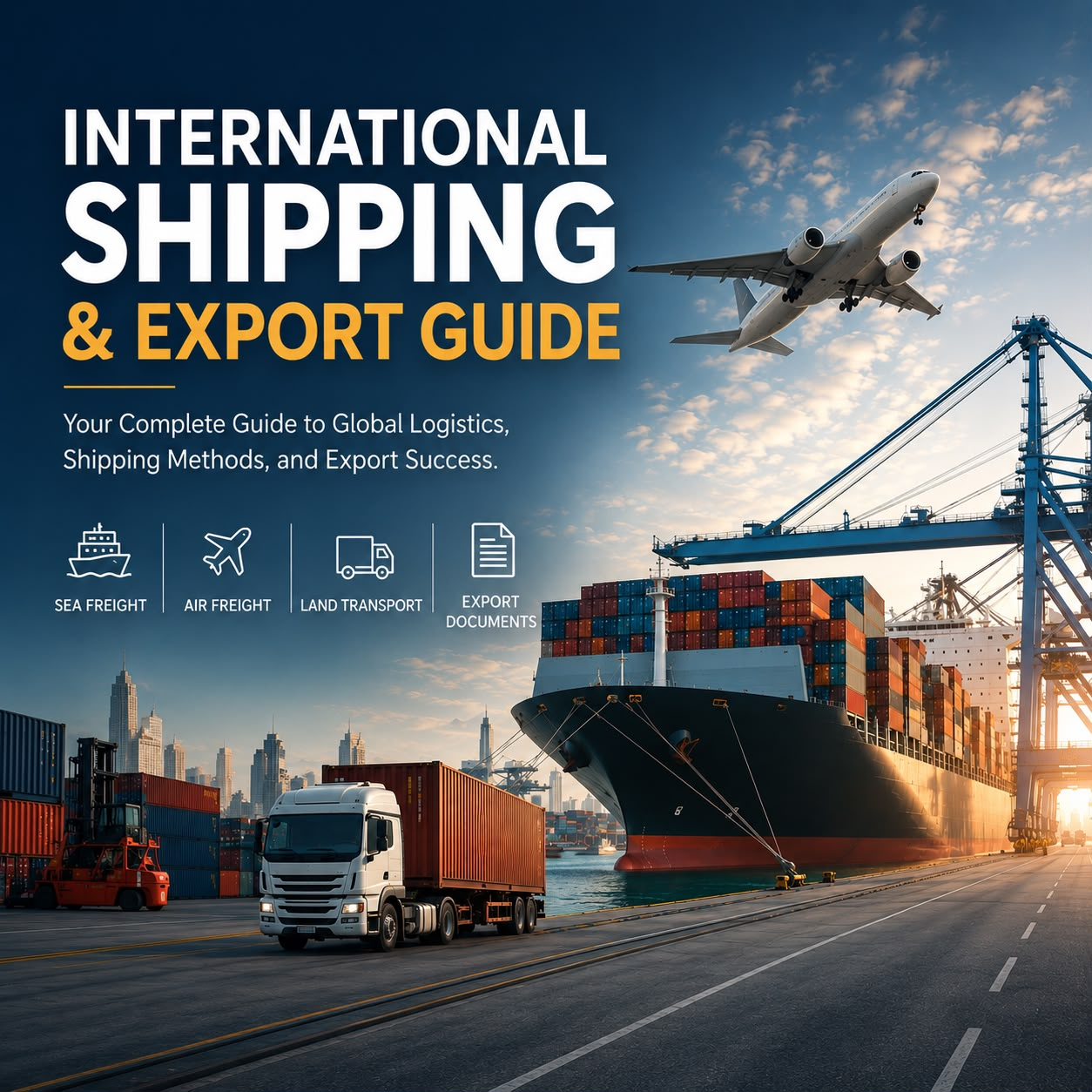
International shipping is the foundational backbone of cross-border trade, enabling businesses to expand into new markets with predictable delivery performance and optimized logistics spend. Whether executing your first export transaction or managing high-frequency commercial supply chains, mastering international shipping principles protects profitability, ensures regulatory compliance, and reduces cargo transit risks.
Key Takeaway: Choosing the right Incoterms, preparing complete export documentation, and partnering with an accredited NVOCC freight forwarder can reduce total landed costs by up to 30% while preventing costly port demurrage penalties.
1. Core Incoterms and Cost Allocation
Incoterms (International Commercial Terms) published by the International Chamber of Commerce define the exact division of costs, risks, and responsibilities between buyer and seller:
| Incoterm Rule | Freight Responsibility | Customs Clearance | Risk Transfer Point |
|---|---|---|---|
| EXW (Ex Works) | Buyer manages all transport | Buyer (Export & Import) | At seller's facility |
| FOB (Free on Board) | Seller to port; Buyer pays ocean | Seller (Export); Buyer (Import) | On board the vessel |
| CIF (Cost, Insurance, Freight) | Seller pays ocean freight & insurance | Seller (Export); Buyer (Import) | On board vessel at origin |
| DAP (Delivered at Place) | Seller manages to final destination | Seller (Export); Buyer (Import) | At destination unloaded |
| DDP (Delivered Duty Paid) | Seller manages all costs & duties | Seller (Export & Import) | At destination address |
2. Four-Stage Export Shipping Lifecycle
- Pre-Shipment Planning & Booking: Assessing cargo classification, pallet dimensions, total gross weight, and selecting optimal container equipment (20ft, 40ft, 40ft High Cube, or Flat Rack).
- Export Documentation & Regulatory Compliance: Filing electronic export declarations (AES in the US), validating commercial invoices, packing lists, and certificates of origin.
- Port Drayage & Ocean/Air Transit: Moving containers from factory loading docks to container freight stations (CFS) or ocean container terminals.
- Destination Customs Release & Final Delivery: Destination customs brokerage, duty remittance, container drayage, and warehouse receiving.
Pro Tip: When negotiating commercial sales contracts, avoid EXW if you want control over shipping timelines. FOB or CIF provides sellers greater control over origin handling and documentation accuracy.
3. Optimizing Ocean vs. Air Freight for Exporters
- Ocean Freight: Ideal for heavy machinery, raw materials, automotive parts, and high-volume manufactured goods where cost minimization is the top priority.
- Air Freight: The strategic choice for high-value electronics, pharmaceuticals, urgent replacement parts, and seasonal product launches with tight shelf-life requirements.
Request an Export Freight Review: Partner with Marinex Logistics to design a customized export workflow. Contact our trade specialists today for an end-to-end freight audit and quote.